How often should you mow your lawn?
Most lawns need mowing about once a week in summer and a little less often in spring and autumn. How short you cut matters as much as how often, and the right answer changes with the weather.
 Knights GardensAbout 5 minutes’ read
How often to mow through the year
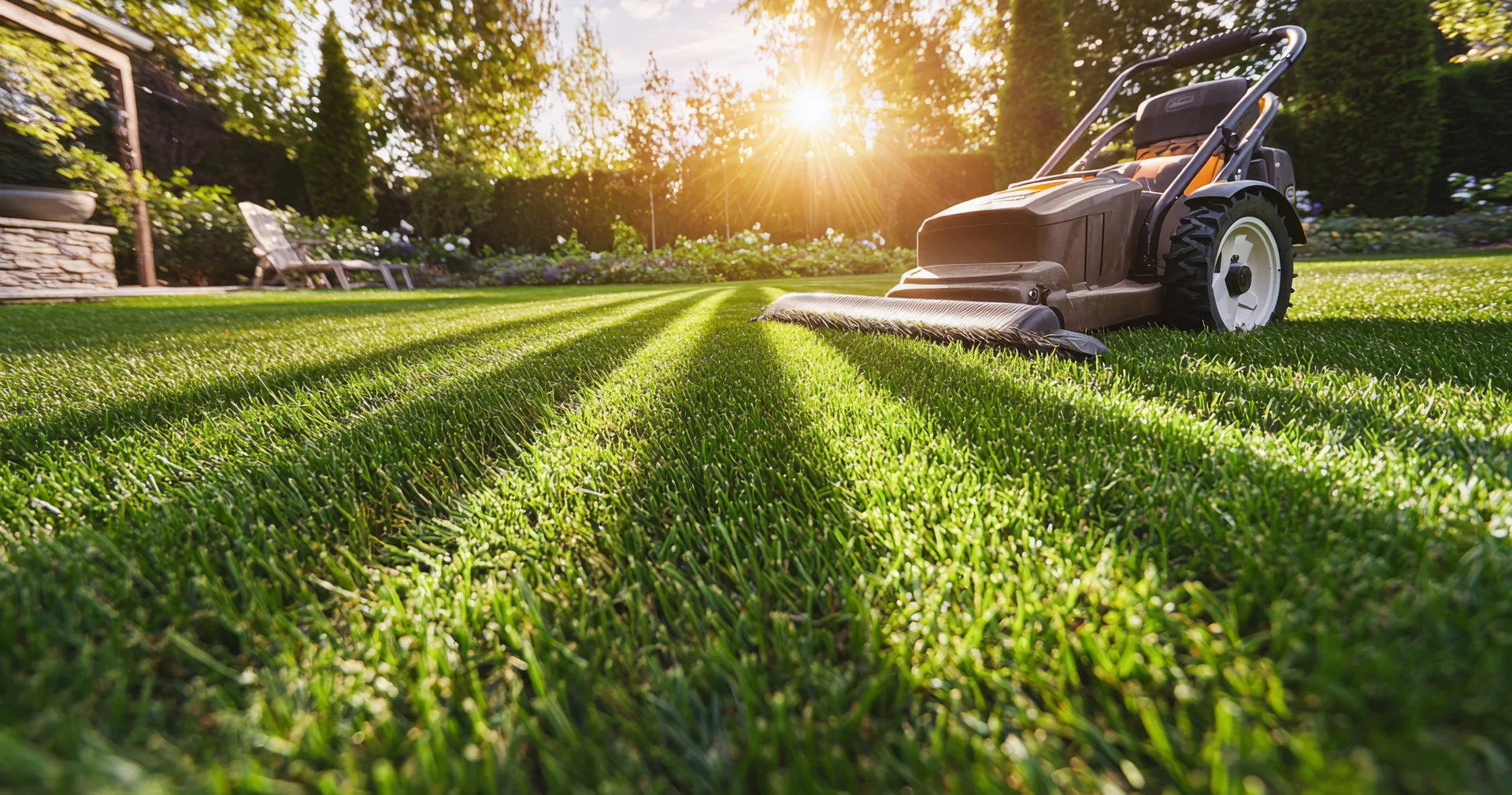
The RHS gives a simple rhythm for an ordinary lawn that you want to look neat. In spring and autumn, mow every one to two weeks, depending on how fast the grass is growing. In summer, mow about once a week on average. In winter you usually don’t need to mow at all, although in a mild spell, with the grass still growing, an occasional cut on a high setting is fine.
Mowing is generally weekly or fortnightly from March to October, so the first cut of the year comes when the grass starts to grow, not on a date in the calendar. Regular mowing keeps the grass growing strongly and discourages weeds. In a drought the RHS says to mow less often, to once a fortnight or even less.
How short to cut
For an ordinary domestic lawn the RHS recommends 13 to 25 mm (half an inch to an inch) in summer, and up to 40 mm (an inch and a half) in spring and autumn. A fine lawn is cut shorter, at 6 to 13 mm.
If you are not sure where your mower is set, measure rather than trusting the dial: hold a ruler against the grass straight after a cut.
The one-third rule, and a lawn that has got long
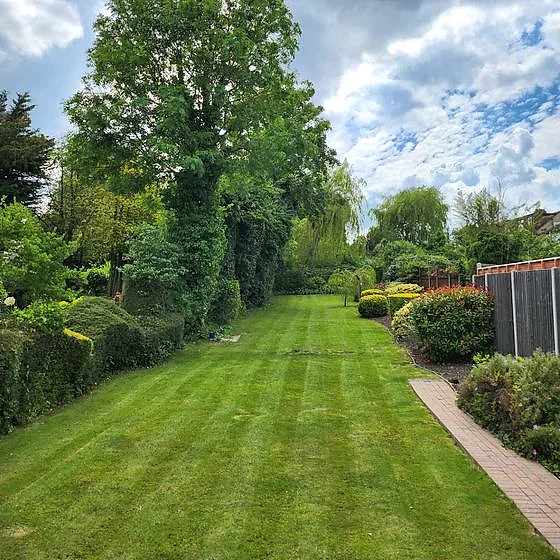
The RHS says never to take off more than one third of the grass height in a single cut. If the grass is 60 mm tall, that means the first cut brings it down to about 40 mm at the lowest. Mowing regularly means each cut removes only a little, which is kinder to the grass than an occasional drastic one.
The same rule tells you what to do with a lawn that has got long after a holiday or a wet spell: cut it in stages, a few days apart, lowering the blades each time until you reach the height you want. If it is far beyond that, a one-off visit is a sensible way to get it back under control; see our garden maintenance page.

When not to mow
- Wet or frosty grass. The RHS says never to mow it. Wait until the lawn has dried or thawed later in the day, or leave it for another day.
- Soft or frozen ground in winter. Don’t mow if the ground is very soft, wet or frozen, or in cold, drying winds.
- A drought. Mow less often. Many lawns go brown in a dry summer and recover when the rain returns.
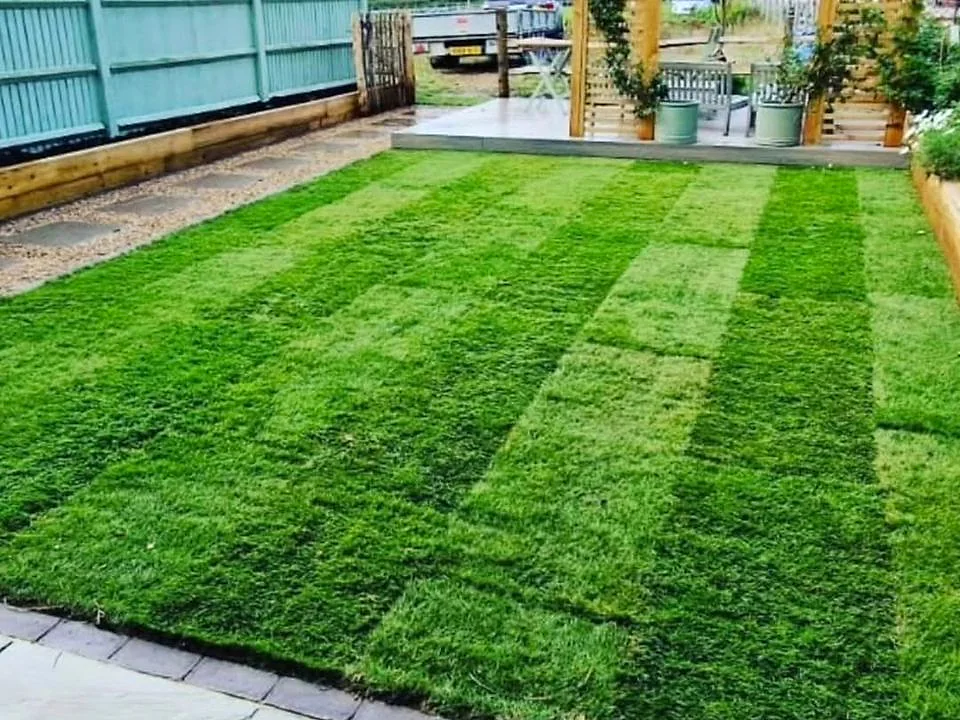
- A brand new lawn. Wait until the grass is at least 5 cm (2 inches) tall, then mow on the highest setting.
Clippings, and a lawn that is allowed to grow
Empty the grass box regularly. A mulching mower chops the clippings finely and returns them to the turf, which gives back some nutrients and helps the soil hold moisture. On long grass it can leave more clippings than the lawn can absorb, and then they need collecting.
Not every lawn has to be mown weekly. The RHS describes No Mow May: stop mowing in early May and start again in June, although leaving the grass uncut until August is better for wildlife. Flower-rich lawns can be cut every four to six weeks in summer. If you try it, mow a path through the long grass so the lawn still looks cared for.

The rest of the lawn year
Mowing is one part of lawn care. Bare patches, from a cut that was too low or from heavy wear, can be repaired in spring or autumn by sowing seed or fitting a piece of turf, according to the RHS. The autumn jobs of scarifying, aerating and top dressing are in our guide to autumn lawn care on London clay, and the jobs that come before the first cut of the year are in our spring garden checklist.
Do it yourself or hand it over
A small lawn and a decent mower make a reasonable weekly job. It gets harder with a long, narrow garden, with no side access so the mower has to go through the property, or in a busy summer. Mowing is part of our garden maintenance visits, cut as often as the season needs and with the clippings cleared up. Where a lawn is past saving, see lawns and turfing. We look after lawns in Muswell Hill, Finchley Central and Southgate, among many other parts of North London.