The best hedges for London front gardens
A front hedge has to earn its place: look tidy all year, screen the home from the street and cope with city conditions. Privet, laurel, beech, yew and box all do the job, in different ways and with different catches.
 Knights GardensAbout 5 minutes’ read

What a front hedge has to do
Start with what you want from it. A hedge that screens the windows needs height and density all year. A low hedge along a path or border is there for shape. Either way it needs trimming, and the more formal and tidy you want it, the more often it will need cutting.
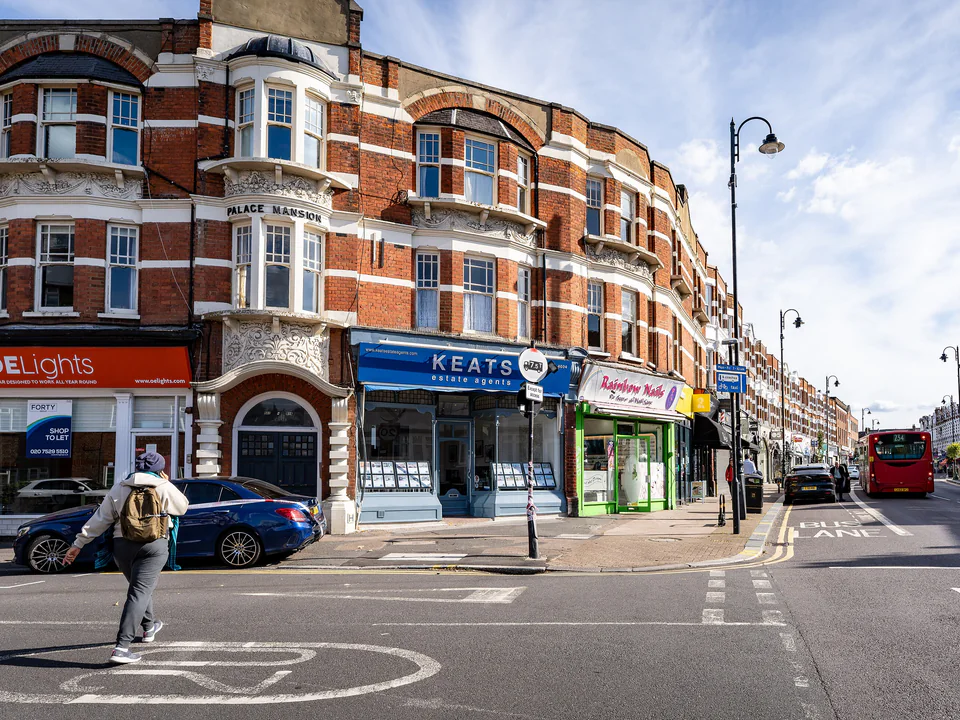
The RHS lists privet, cherry laurel, beech, hornbeam and yew as medium to large hedging plants, typically 90 to 180 cm tall, with plants spaced 30 to 60 cm apart. Box is the one on the list that suits a low hedge. Privet, laurel and conifer hedges are common in North London front gardens, and a street-side hedge left to grow soon crowds the path and the gate.
Privet
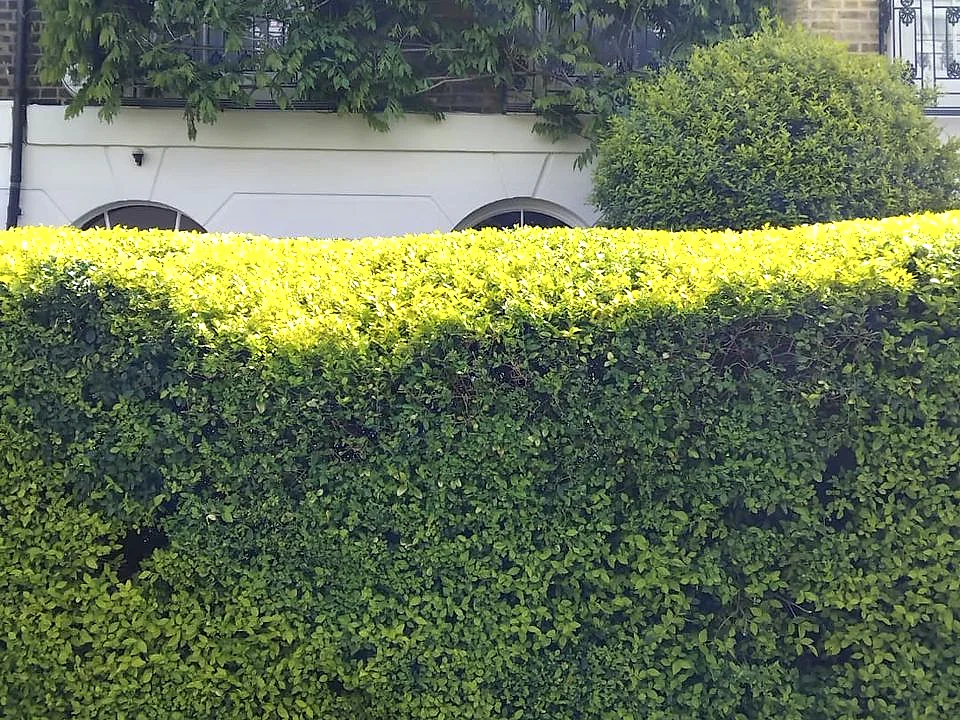
Privet is semi-evergreen, but the RHS says it tends to be fully evergreen in mild areas and in towns and cities, which helps in London. It clips well into a formal shape. The RHS recommends trimming a formal privet hedge two or three times during the growing season, and describes it as a good choice, though prone to honey fungus.
Cherry laurel and Portuguese laurel
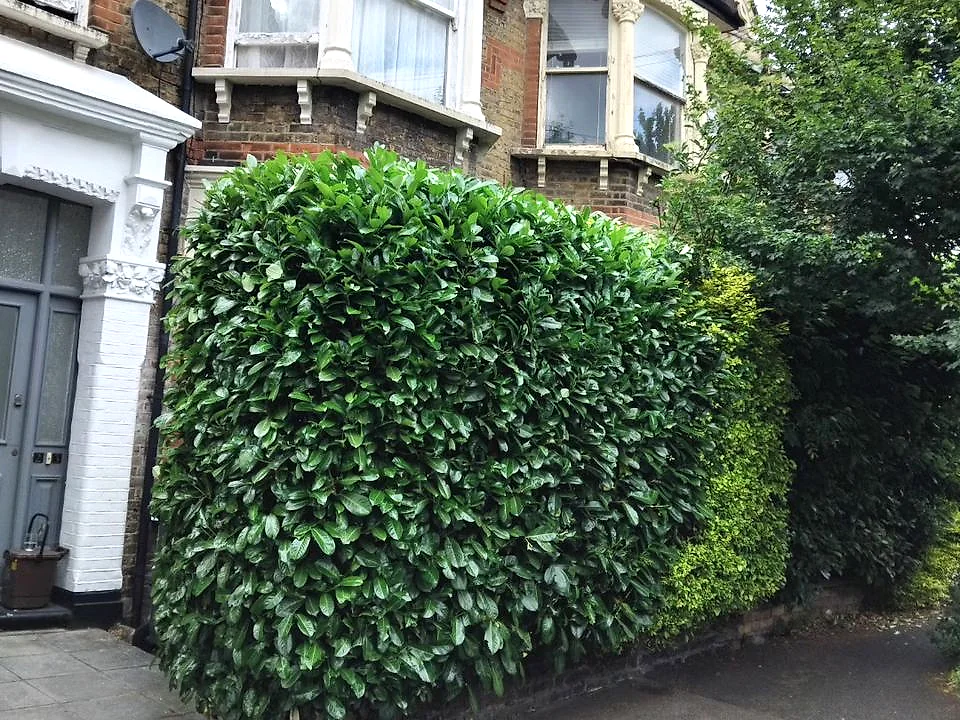
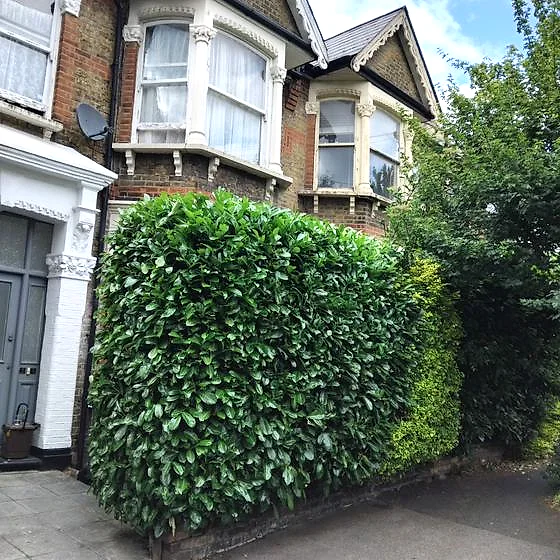
Cherry laurel is evergreen and large-leaved, and the RHS recommends it for noise reduction. It needs trimming twice in the growing season, and because of the size of the leaves the RHS suggests cutting individual stems with secateurs or loppers if you have the time, since shears and hedge trimmers leave cut leaf surfaces that look unsightly. Portuguese laurel is a dense, bushy evergreen that tolerates partial shade.

Beech and hornbeam
Beech is deciduous but keeps its leaves into winter, so it screens year-round, and the RHS says it is suitable for formal hedges. A beech hedge needs one trim, in late summer. Hornbeam is similar but doesn’t hold its leaves for as long, and is better suited to cold situations than beech. It is trimmed once, in mid to late summer. The RHS notes that beech and hornbeam pollen can contribute to hay fever.
Yew
The RHS calls yew an excellent choice for a formal, dense hedge. It grows more slowly than other conifers, though it can make about 30 cm a year in good conditions, and it is trimmed twice, in summer and autumn. Its advantage is recovery: the RHS says an overgrown yew hedge can often be restored by hard pruning in late winter. Yew is also on the RHS’s list for capturing air pollution and reducing noise.
Box: still popular, but risky
Box is the classic low front hedge, and the RHS lists the dwarf form ‘Suffruticosa’ at 30 to 90 cm. Two problems now count against it. Box blight is a fungal disease that causes bare patches, brown leaves and dieback, and it is most active in wet periods. The box tree caterpillar, the larva of an East Asian moth, had become established in parts of London by the end of 2014. The RHS advises checking box often from early spring and removing caterpillars by hand where practical. Where that is impractical, it suggests a different hedge or topiary plant, and says no alternative has all of box’s qualities, but several are promising.
Planting and early care
The RHS advises planting evergreen and semi-evergreen hedges such as privet and yew in early autumn, although they can go in from late autumn until late winter. Deciduous hedges such as beech and hornbeam are planted from leaf fall until late winter. Bare-root plants, sold while dormant in winter or early spring, are usually cheaper than container plants. Delay if the soil is waterlogged or frozen.
Space plants 30 to 60 cm apart depending on size, and use a staggered double row for a hedge thicker than 90 cm. Keep a new hedge well watered for its first two years. For a boundary hedge, plant about 90 cm back from the line so it doesn’t overhang the pavement or a neighbour’s garden as it grows. Where an old hedge has thinned out, new plants can fill the gaps; see planting.
Cutting it, and when to ask for help
Whatever you choose, check for nesting birds before any cut in spring or summer; our guide to when you can cut a hedge has the details, and our guide to when to prune trees and shrubs covers the rest of the garden. We cut front and back hedges, including conifer and privet, as one-off jobs or on regular visits; see hedge cutting, and planting for new hedging plants. We look after front gardens in Crouch End, Highgate and Hampstead Garden Suburb, among many other parts of North London.