When can you cut a hedge? Nesting season and the law
No law sets a closed season for cutting a garden hedge, but a law does protect nesting birds, and that is what decides when it is safe to cut. Here is how it works for a hedge in North London.
 Knights GardensAbout 6 minutes’ read

What the law says about nesting birds
The Wildlife and Countryside Act 1981 makes it an offence to intentionally take, damage or destroy the nest of any wild bird while that nest is in use or being built, and to take or destroy a wild bird’s egg. The Act does not name a nesting season, and it does not say a hedge can’t be cut in spring or summer. What matters is whether there is an active nest in the hedge when the shears or trimmer go in.
The Act also has a defence for damage that was the incidental result of a lawful operation and could not reasonably have been avoided. You would be relying on that, so the sensible way to stay on the right side of the law is to look before you cut. This article is general information, not legal advice.
The dates the RSPB suggests
The RSPB recommends cutting hedges only between 1 September and 28 February. It adds that some birds begin nesting in January or February and others carry on into late September, so even inside that window you should check the hedge for nests first.
Outside those months the RSPB says cutting is still legal as long as no active nest is damaged, but you are far more likely to find one. In practice that means the main hedge cut, and any hard cut-back of an overgrown hedge, belongs in autumn or winter, and spring or summer trims need a careful look first.
The 1 March to 31 August rule is about farmland
You may read that cutting hedges is banned from 1 March to 31 August. That is a real rule, but it comes from the Management of Hedgerows (England) Regulations 2024 and is aimed at hedges on or next to agricultural land. GOV.UK says hedges within the grounds of a dwelling, or marking the boundary of those grounds, are outside it.
So for most homes in North London that rule is not the one that applies. The nesting birds law above still applies to every hedge, in every garden.
How to check a hedge for nests before you cut
The RSPB’s advice is to watch the hedge for a few days before cutting, and to look closely at the vegetation. In practice:
- Watch for birds flying in and out, especially with food or nesting material.
- Look from both sides of the hedge, and at the base as well as the top.
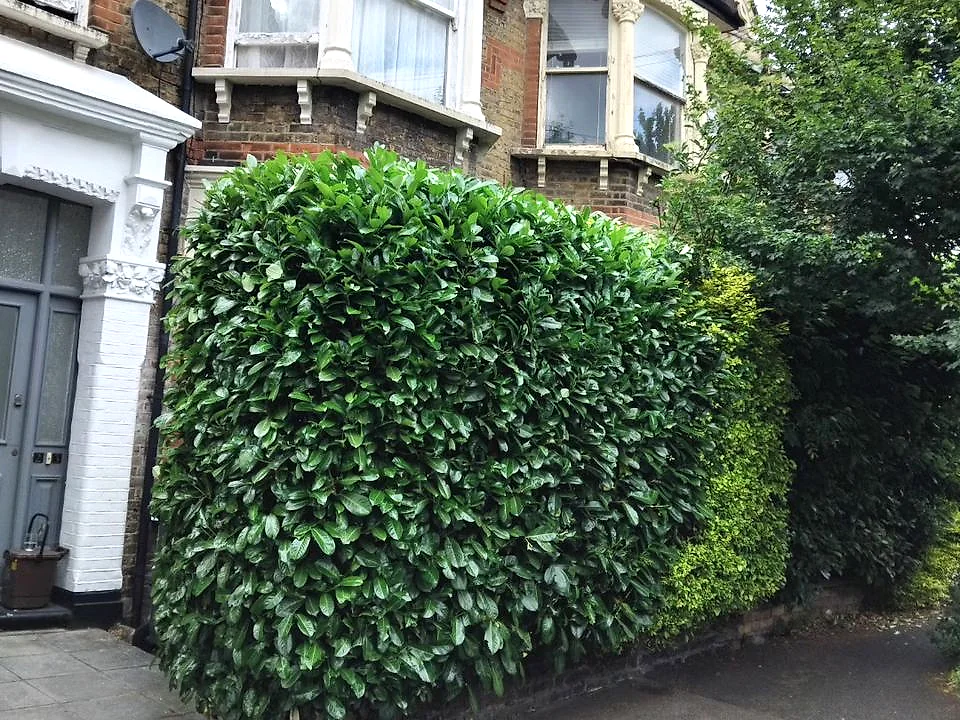
- Take extra care with dense evergreen hedges such as laurel, privet and conifer, where a nest can be hard to see.
- Use hand shears or loppers where you can. The RSPB suggests manual tools over electric ones because you can stop the moment you see something.
- If you find a nest in use, leave that section alone until the young have left, and cut the rest.
A quiet hedge is not an empty one, so don’t assume.
When a spring or summer cut cannot wait
Sometimes a hedge is blocking a path, a gate or the view at a drive. Check it carefully for nests first, cut back only what you need to, and leave any section where a nest is in use. If you are unsure, ask a professional to look, or wait a few weeks and look again.
If you hire someone, ask how they check hedges for nests. A good answer is a specific one. If you have seen birds nesting in your hedge, say so when you ask for a quote so it is taken into account. You can read more about hedge cutting on our services page.
Cutting different kinds of hedge
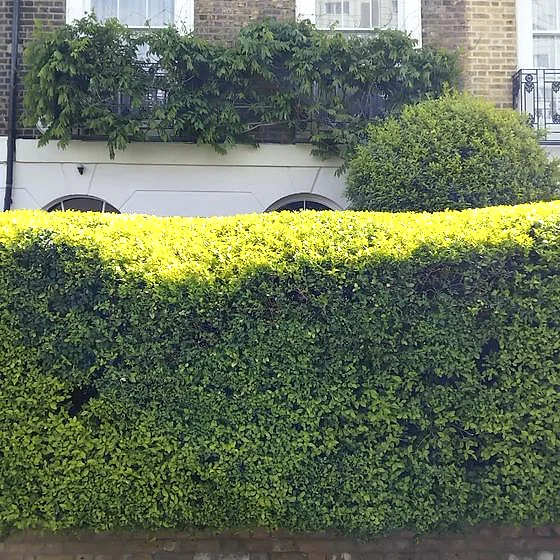
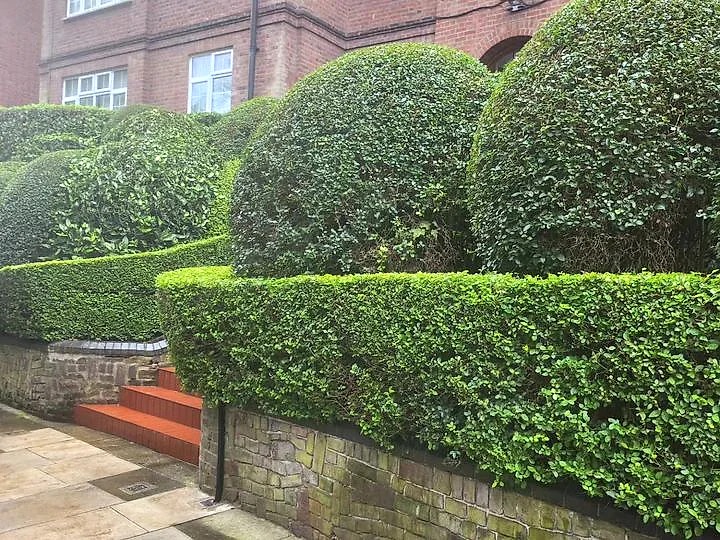
Privet, laurel and conifer hedges are common in North London front gardens. A few general points from good practice:
- Little and often is kinder to most hedges than one drastic cut. A light trim keeps the shape and avoids exposing bare wood.
- Conifers such as Leyland cypress do not normally regrow from bare brown wood, so don’t cut back past the green growth.
- Large-leaved laurel looks better cut leaf by leaf with secateurs than sheared, which leaves torn, browning leaves.
- A hard cut-back of an overgrown deciduous hedge is best done inside the 1 September to 28 February window.
If a hedge has thinned out at the base, new hedging plants can fill the gaps. See planting.
How high can a hedge be?
There is no general legal maximum height for a garden hedge in England. The exception is a planning condition on a particular property, so if yours has one about boundary planting, check it.
If a neighbour’s hedge is a problem, the law gives you one route. Under Part 8 of the Anti-social Behaviour Act 2003 you can ask the council to look at a hedge made up of two or more mostly evergreen or semi-evergreen trees or shrubs, more than 2 metres tall, that affects your enjoyment of your home or garden. GOV.UK says you must first try to settle it with your neighbour, and you may have to pay the council a fee to consider the complaint. A council’s decision is about the hedge’s height, and it does not give you the right to cut the neighbour’s hedge yourself.
When to call a professional
Tall hedges mean ladders, and ladders and powered trimmers are a poor combination. A very tall conifer hedge, a hedge you can only reach from a neighbour’s side, or a hedge that needs cutting back hard are all jobs worth handing over.
We cut front and back hedges, including conifer and privet, on regular maintenance visits or as one-off jobs; see garden maintenance and hedge cutting. Where a tree sits in or beside the hedge, our guide to tree work and council consent covers what to check first.