How to clean and look after timber decking
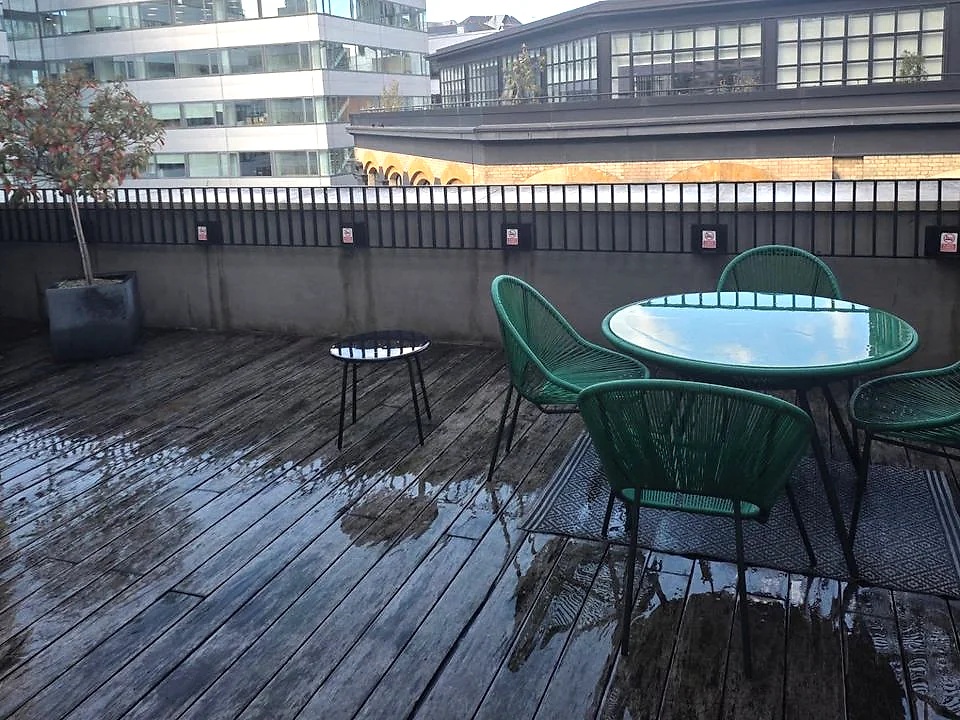
Timber decking looks good for a long time if you look after it, and turns green, slippery and soft if you don’t. Most of the work is small and regular. Here is what to do, what to avoid and when a board is past saving.
 Knights GardensAbout 5 minutes’ read

Little and often: sweep and check
The easiest job is the one that stops the others. Sweep leaves, pollen and dirt off the boards, because mould and fungus grow on that debris. Clear the gaps between the boards too, since clogged gaps stop water draining away, and sweep off standing water after heavy rain. A quick look each week for damage, dirt or anything starting to rot catches problems early. Our winter garden jobs and leaf clearance guide covers leaves.
Cleaning off algae and moss
For timber, slightly soapy water and a sponge will do, with a nylon scourer used along the grain for stubborn patches. Scrubbing against the grain can leave marks. Decking cleaners are sold for the heavy cases, and the label will say how long to leave one on before rinsing. If there is mould, treat it before washing, since a pressure washer runs the risk of spreading the spores, according to Ronseal.
Should you pressure wash decking?
Only with care. A pressure washer can roughen the wood, and roughened timber can become brittle or even split. STIHL says to use a pressure washer only on hardwoods in durability classes 1 and 2, such as teak and oak, and to clean softwood decking, in classes 3 and 4, by hand with a stiff broom and scrubbing brush. It also says not to use the direct jet: use a wash brush attachment, with the pressure set low. Ronseal suggests starting about half a metre away from the surface. Don’t scrub across the grain, and clean the whole deck evenly so the colour stays uniform.
We have washed decking and finished it with a natural protector; see pressure washing, and tell us what the decking is made of when you ask.
Oil, stain or paint?
Oil soaks into the wood, keeps a natural look and is less slippery. It can’t be stained or painted over without stripping. Stain sits on the surface, is durable under foot and hides the grain, but it can be slippery when wet and more prone to peeling and flaking if it isn’t maintained, according to Ronseal. Homebuilding says sealers with silicone or wax additives are reapplied about every year, translucent stains need refreshing every two to three years, and solid stains and paints last around five years and need sanding or stripping before recoating.
Whichever you use, clean the deck, let it dry and strip off the previous coat first. STIHL suggests leaving the deck to dry for 24 hours before oiling, because oiling damp wood can trap moisture and lead to rot. New decking is best left to weather for about six months before it is treated, says Ronseal, so the factory treatment wears off.
Rot, posts and when to replace
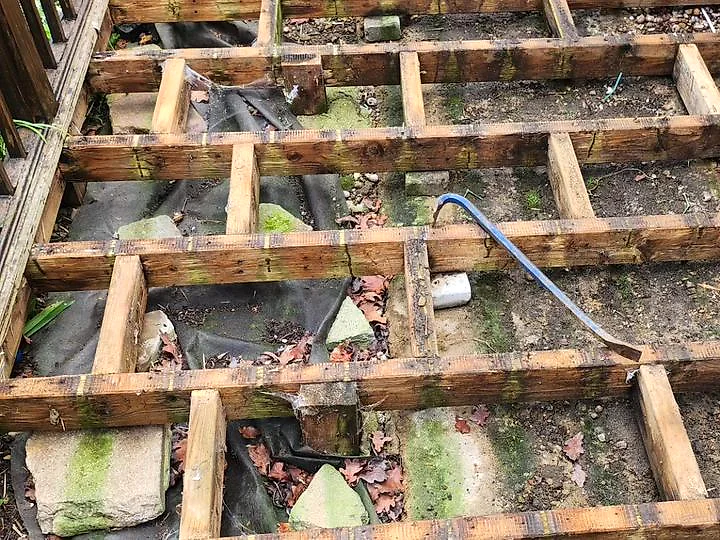
Press on the boards and look underneath. Soft or spongy areas, bubbling paint, crumbling timber and holes all mean trouble. Homebuilding advises replacing broken or rotten boards promptly, because rot can spread to neighbouring boards, and says posts and joists that touch the ground need heavier treatment with a suitable in-ground preservative. When the frame itself has gone, the answer is a new one: we build new decking structures from treated timber where an old frame has rotted.
If you are replacing a deck, check the rules. The Planning Portal says decking can be permitted development if it is no more than 30 cm above the ground, and that decking, extensions and outbuildings together should cover no more than half the garden. Listed buildings and Article 4 directions change that.

A simple yearly routine
- Spring: sweep, check every board and the frame, and wash off the winter’s green.
- Once the deck has dried: oil or touch up the stain, or reseal if it is due.
- Summer: sweep regularly, and wipe up spills such as grease and food straight away.
- Autumn: keep leaves off the boards, and clear the gaps.
When to ask for help
A deck that needs more than a scrub, such as a rotten board, a failed frame or a flight of steps, is a job for patios and decking. A deck that just needs washing can go alongside a tidy-up on a garden maintenance visit. We look after gardens in Crouch End, Finchley Central and Wood Green, among many other parts of North London.